
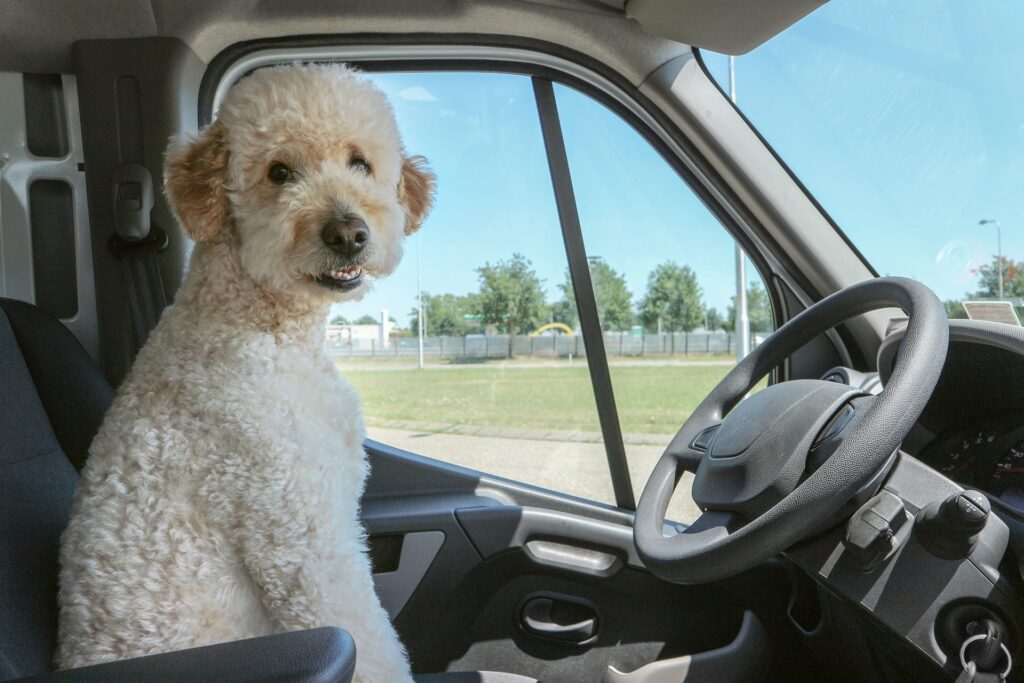
Travelling with your pet abroad can be challenging if not confusing for the first timer travelers. The process is a bit complex but it’s possible. Most countries and airlines have different requirements in order to permit pet travel. The same applies if you’re travelling by road or sea. The following should be put into consideration when planning to travel with your fur-baby;
Determine your mode of transport
Several travel methods can be chosen depending on your plans, distance or just personal preference. Air, road or sea may be used to transport your pet. The quickest mode of the transport should always be prioritized as transport for pets can cause extreme stress. If your using road transport, it’s important to acclimatize your pet to the car you will be using. This can be done by allowing the pet to get in the car or just spend some time in the car as well as moving short distances for your pet to get used to the car movement. If your using airline, make sure you choose the pet friendly airlines who should assure you that your pet will be taken care of during layovers. Layovers should not exceed 2 hours during transit.
Will your pet travel as cargo or in the cabin?
Some airlines will allow small dogs and cats to travel in the cabin. Service dogs with proper documentation are also allowed in the cabin regardless of the size. If your pet is travelling as cargo you may require the services of clearing agent from the departure country and destination country
Decide on the country of destination
Most people who travel with their pets are probably going a holiday or for work purposes. There is need to confirm if the country you wish to visit is pet friendly as well as weather in that country during the period you will be travelling. Pets from temperate countries may have difficulty coping in tropical countries and vice versa Is true. In some cases, if you must go in extreme weather countries having such information help in mitigating such weather by bringing with you the appropriate attires for your pet.
Some countries have strict requirements for them to allow pets to enter in their country for example New Zealand and European union especially if you’re coming from high risk countries for rabies. Recently united states through center for disease control (CDC) has changed its policy on pets arriving from high risk countries for rabies. After 14th October 2021 dogs must have CDC import permit and enter through specific airports
Have a Date of travel
The exact date of travel or tentative date of travel will help in planning. Most documents for example health certificate and blood tests are time limited and you may not want them to expire on you or during travel. The date will also help your veterinarians to know when to do the health examination and blood work for your travel documents
Book an appointment with your veterinarian
Once you have your date you will book an appointment with your veterinarian with all the specific details of your pet. Most veterinarians are experienced in pet travel documentation and if they are not, they should be able to link you with their colleagues who is experienced in pet travel. The veterinarian will analyze your documents and examine your pet and advice you accordingly. There are many scenarios depending on the country your visiting, vaccination details, if microchipped, mode of transport and if your pet is travelling as cargo or in cabin
Emergency and health during travel
When travelling your pet should have its regular food supply attached to its crate as well as bottle of water. If travelling by road feeding may be limited but exercise breaks should be planned for if the journey is more than 2 hours. When travelling you should the emergency veterinarian lines near your destination and your regular veterinarian just in case the two veterinarians may need to share information about your pet health and medications in cases of emergency. These contacts should be kept on your phone for ease of accessibility
General documentations required for your dog or cat pet travel
The following are the documentations you might require while travelling with your pet. Some countries may require all or some of them depending on their pet travel policy. Each document will vary from country to country
Import permit
Import permit is issued by the destination country. The state veterinarian issues import permit with specific requirements to be fulfilled before the pet can be accepted to enter the country. The import permit is applied for by the owner of the pet or an appointed assistance from pet travel agency. Most countries require the pet to be vaccinated against rabies at age of 3 months if it’s a puppy or kitten less than 3 months the vaccination certificate for the mother should be provided showing up to date rabies vaccination. Other vaccinations and treatments for dogs may include vaccination against;
Canine parvo virus, Canine distemper, Canine coronavirus, Canine hepatitis, Canine leptospirosis, and proof of worming against internal(worms) and external parasites (fleas and ticks).
For cats it may include vaccination against feline viral rhinotracheitis, calici virus and panleukopenia and worming details
The application letter should include the following;
- Vaccination certificate signed by your registered veterinarian indicating all the vaccination and worming dates of administration and the expiry dates
- The name of your pet
- Microchip number if implanted
- Your names as the applicant
The import permit will be issued stating the requirements to be satisfied by the departure country based on analysis of your application. Some of the requirements apart from vaccination and treatment may also include a waiting period or quarantine timeline at the departure country or destination country
Note that in United states this document as of 14th October 2021 is being issued by the CDC
Export permit
Once the state veterinarian issues the import permit, the departure country state veterinarian will issue the export permit after confirming that the requirements on the import permit have been satisfied.
The export permit similarly is applied for with the attached vaccination certificates and the import permit. The export permit will give the permission to leave the country with your pet by the specified mode of transport stipulated in the import permit or the export permit itself
Veterinary health certificate
This certificate sometimes called international veterinary certificate is issued by your veterinarian and it must be endorsed by the state veterinarian. Your veterinarian will examine your pet within 10 days of your travel. S/he may do blood tests to profile your pet health. These may include complete blood count, liver and kidney function tests s/he finds them necessary based on clinical findings. The certificate should certify that your pet is fit to travel
Vaccination certificate
Sometimes its branded as pet passport. This certificate contains all the details of your pet including
- Owner details and address
- Name of your pet
- Microchip number
- Vaccines given and due dates
- Medical history
Microchip and microchip certificate
This is the identification chip normally inserted between the two shoulder blades of your pet. The chip is a rice grain size and its normally a 15-digit number for the universal microchips. The importance of universal microchip is that it can be read by any universal microchip reader all over the world. Some countries may ask for it some may not. Its really recommended to have it as this is the only identification method that connects your pet to it passport and it can act as proof of ownership.
The microchip certificate will contain details of your pet and location of the chip as well as the date of implantation. It is recommended that the chip be inserted before the rabies blood titers are taken for laboratory analysis
Tests and blood work results
Apart from the tests to analyze your pet health profile, some countries for example European union and Australia will request for rabies titers to proof that your pet seroconverted after rabies vaccination. This means that does your pet has enough protection antibodies against rabies. The cut off point is anything above 0.5IU/ML. Sometimes written as positive meaning your pet Is protected against rabies after vaccination
Airline policy
When booking ticket for your pets you should look for the pet friendly airlines. You may do this by asking for the airline pet policy and how your pets are managed during layovers and whether they provide pet hotel facilities during travel. This arrangement should be done early enough to avoid inconveniences in the last minutes. Some airlines will allow pet in cabin while other will only allow pets to travel as cargo
Other requirements to consider
Clearing agents
If your pet is travelling as cargo you may require the services of a clearing agent on the departure country and the destination country. Most experienced clearing agents can make your life easier by assisting you with all the processes at a fee
IATA approved travelling crate/cage
Most pet shops or through amazon you get a crate for your pet to travel in. The size depends on the size of the pet. Generally, your pet should be comfortable while travelling in the cage and above the cage must be IATA certified for air travel. The specifics of the crates are that your pet must be able to stand on it and move around freely. It should have provisions for providing water and food without opening the crate during travel.
It is recommended that you acclimatize your pet on travelling on the crate. That means the crate should procured in advance to give your pet time to get used being inside the crate
Waiting period, Quarantine and further tests
Some countries will require you to wait before travelling after getting your rabies titer tests. This is just an attempt by the destination country to make sure that the incubation period of rabies is over and that your pet is free from rabies and any other contagious disease. For example, in European countries they may require you to wait for up to 3 months.
On arrival some countries may recommend quarantine for your pets if they suspect they may be incubating some contagious disease. You should find out in advance under what circumstances can this happen as this can be very traumatizing for our fur-babies and the owner as well
During quarantine some countries may recommended further tests for specific diseases. Probably this option may help to avoid quarantine, or it may be enforced together with the quarantine.
Some of these measures may seem punitive but remember if a disease is contagious it can affect so many animals within that country and if you love animals, I think this will be unfair that you’re the source of the disease