
Improving efficiency in dairy production will help the farmer increase dairy profitability. Efficiency in the dairy farm means using optimal rather than maximum inputs to produce Maximum quality milk. Management efficiency is one of the key factors to consider before automation and robotization. Once the management is effective and efficient then it’s time to explore into systems to aid management in enhancing your production. A dairy farm must have its master plan blueprints factoring in the automation, herd size, fodder source, production levels and farm size required. This kind of planning will save the farm a great amount of money during expansions and systematization. Any technology adoption should be based on the perceived benefit to cost ratio. Below are some of the systems you may factor in during your dairy farm planning project.
Automated feeding system
Feeding is a key factor in dairy production. Precise feeding maximizes profits through improved feed conversion ratios, avoiding feed wastage, reduced labor and creates time for other activities in the farm. Most automatic feeding systems rely on the production levels of each cow. Grouping of cows in the farm is a very important management tool to accomplish precise feeding. Cows can be grouped in terms of their lactation stage and or levels of production. Other groups may include the heifers, dry cows (pregnant or open) which requires different feed formulations. Automated systems take advantage of feeding dairy cows on total mixed ration (TMR). This means all the ingredients are mixed at once. TMR helps in equal distribution of nutritional elements to all cows as required and helps to avoid selective feeder behavior in some cows. Automatic feeders pick their feed ingredients from the kitchen which is loaded at a certain frequency in a week. Inspection of the kitchen is advised to be done often to make sure the feed provided is fresh and has no molds or any other impurities.
Robotic milking
Robotic milking or automatic milking systems (AM-S) is the alternative when the labour cost for milking are high in certain region. AM-S are equipped with sensors to control its functions. These sensors include milking machine vacuum levels, teat cup attachments and cow identification. Other sensors may be installed to detect cow weight, feed intake, milk quality/temperature. All the data is stored in a database and a management system is used to analyze the data for display on the screen. In case of critical problem with the cow an alert is send to the herdsman. The data collected can also be used by other integrated systems like the automated feeding system for precise feeding
Milking machine is the part of the AM-S which unlike the conventional milking system with air to milk ratio of 3:1, the AM-S has an air to milk ratio of 10:1 due to longer length of the milk tubes.AM-S will also have boiling water cleaning system1.
Teat cleaning system Is also installed. The udder and the teats must be cleaned just as it’s done in the conventional milking. The AM-S is based on average dirt on the teat and the udder as the system cannot differentiate the cleanliness that can be left without cleaning. The concept of cleaning also stimulates milk letdown as well as helping in checking the udder health. Most systems are set up with a goal of avoiding disinfectants in the milk. In this case plain water is used to clean the teats after the use of any teat disinfectants. Stimulation of milk letdown reflex helps in complete milking hence avoiding milk being retained in the teat cistern which can be a good media for bacteria growth bringing about mastitis
Heat detection systems
The sustainability of dairy farming is based on the reproductive performance of the herd. The number of cows and heifers coming on heat and being submitted for mating with subsequent conception determines the number of fresh cow(milking) you will have in the farm in the future. This will also determine the replacement heifers available for the future milking herd. Heat detection is a key driver of the whole process. Achieving good results requires high degree of skill and organization. Automation of this process can be of great aid to the visual heat detection. Automation involves use of heat patches for example KAMAR™. The technology depends on camera detection or sensors to detect activity of the animals as cows on heat tend to be restless. The technology only indicates possible estrous, visual confirmation will be required. The success of these technologies will depend on the quality and frequency of the data fed to the databases on which they depend on. Your decision to invest on such a system will depend on the benefit to cost ratio. This will be dictated by your current method of heat detection. A better heat detection by the farm workers may become worse sometimes due to the installation of a system which the farm workers are not skilled on. It is advised to still use the visual method until the farm team is used and skilled to use the technology effectively.
Mastitis detection system
Mastitis contributes to great losses in dairy farm specifically due to reduction of production especially when its detected late or not detected at all. Technologies to assist in early detection can save farmers from such losses. Most mastitis detection are mounted on the automatic milking machines or at the entry point to the milking parlour2. The technologies are based on detection of the inflammatory reaction or somatic cells at the udder and specifically at quarter level3. The mastitis detection system helps in early detection for early action to be taken as wells as reducing the time for testing all the teats by the milker manually.
Electronic ID
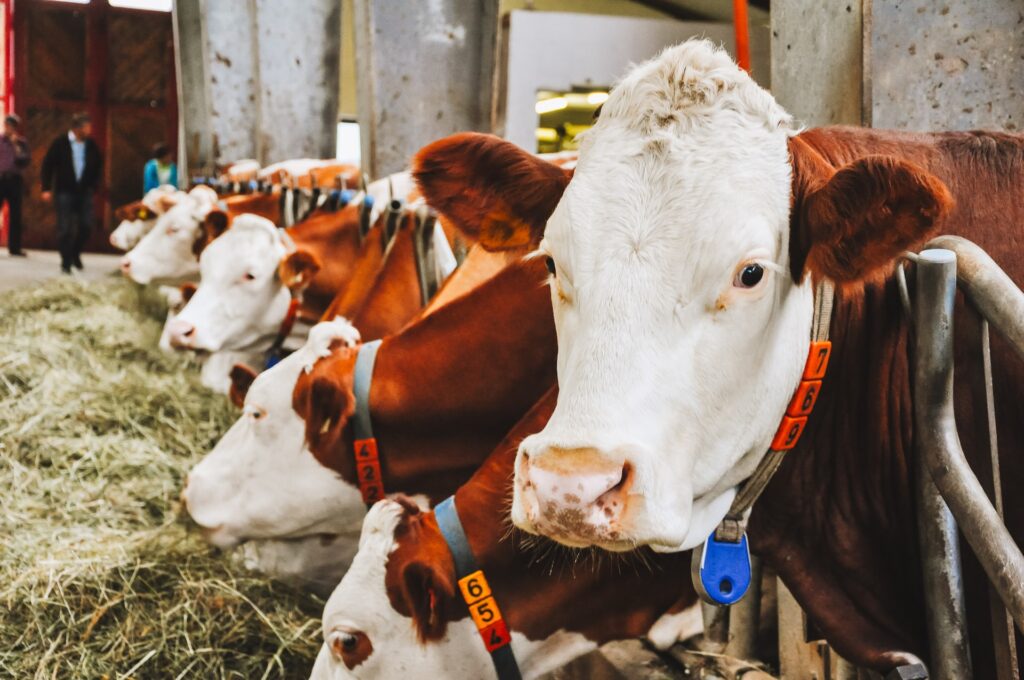
Electronic identification (EID) is the starting point for any successful automation. Large amount of data can be collected seamlessly improving accuracy, providing information which can be shared by different systems at the farm for better decision making and facilitating individual animal management. EID consist of the a) transponder which can be an ear tag, neck collar or rumen bolus b) a receiver which is the reader, c) the data processing unit which is mostly a computer. The data can be linked to dairy management system for various output to enable timely decision making by the farmer. When installing EID, you should consider whether they are environmentally resilience and their compatibility to other systems
Cattle herding drones
At the zero grazing or field grazing farming models, unmanned aerial vehicles AKA drones can be used to monitor the animal health, environmental impact, animal welfare and production. Using cameras and infra-red technology drones can identify GPS collar fitted animals with pin-point precision and be able to identify each individual animal and take necessary managerial actions to improve production by reducing herding time and human errors. They can also be used to track lost animals or to understand the feed intake behavior of your animals while at the kitchen table. Pasture monitoring is another aspect of drone use. Drones can be used to assess the quality and or quantity of the pasture available for your dairy farm
Blockchain product traceability
Dairy industry consumers and its regulator have great concerns on the credibility and safety of the products sold through the value chain. Blockchain is an unchangeable distributed ledger of digital transaction data which is authenticated at any transaction done, linked together in a chain. Through a QR code the consumer or the regulator can determine the source and all the contact points of the product in a popular concept of farm to fork. Apart from helping to validate the credibility and safety of the product the process can help in identifying or preventing outbreaks emanating from milk contamination. The system will help farmers to reduce on losses from damaged products as well as being educated on market requirements through consumer feedback.
Milk freshness technology
Advances in technology have been developed to enhance milk freshness without literally “cooking” it-pasteurization. The process of pasteurization at 72oc for at least 15 seconds deactivates beneficial enzymes for example alkaline phosphatase and vitamins for example B2 available in raw milk. This is an area to investigate once the technology is approved for commercial use. Farmers can improve milk shelf life and sale at premium price due to availability of naturally occurring vitamins and enzymes
Cattle traffic management
Cow traffic management is important especially if your using Automatic milking system4. The traffic system used could be free traffic system where the cows are allowed free choice and movement to the milk robot, feed banker and stalls. Guided traffic system involves a software using algorithms to determine which cow moves in what direction-feed to milk, milk to feed, and other grazing options. The traffic systems chosen are determined by initial investment, freedom versus control, labour efficiency, feeding strategy and system capacity.
Dairy Farm management system
It is with no doubt that a huge amount of data and decisions will be required to improve efficiency in any dairy farm stocking several dairy cows. A dairy management system may range from simple excel sheet data collection to fully automated dairy system. The capability of the system should be able to help the dairy farmer make timely decisions rather than the complexity of the system. The dairy farm management system should include information ranging from the fodder production or sourcing, labour dynamics and cost, reproduction and production parameters, feeding details and health parameters. All these should be integrated to facilitate assessment of the farm financial situation and help in strategic decisions to achieve the farm goals.
Reference
1. Automatic milking – Milkproduction.com. Accessed August 31, 2021. http://www.milkproduction.com/Library/Scientific-articles/Milk–milking/Automatic-milking/
2. Kamphuis C, Mollenhorst H, Heesterbeek JAP, Hogeveen H. Detection of clinical mastitis with sensor data from automatic milking systems is improved by using decision-tree induction. Journal of Dairy Science. 2010;93(8):3616-3627. doi:10.3168/jds.2010-3228
3. Udder Health and Mastitis Detection Technology | EIO Diagnostics. EIO Diagnostics Inc. Accessed September 1, 2021. https://eiodiagnostics.com/technology/
4. Devir S, Renkema JA, Huirne RBM, Ipema AH. A New Dairy Control and Management System in the Automatic Milking Farm: Basic Concepts and Components. Journal of Dairy Science. 1993;76(11):3607-3616. doi:10.3168/jds.S0022-0302(93)77701-2