
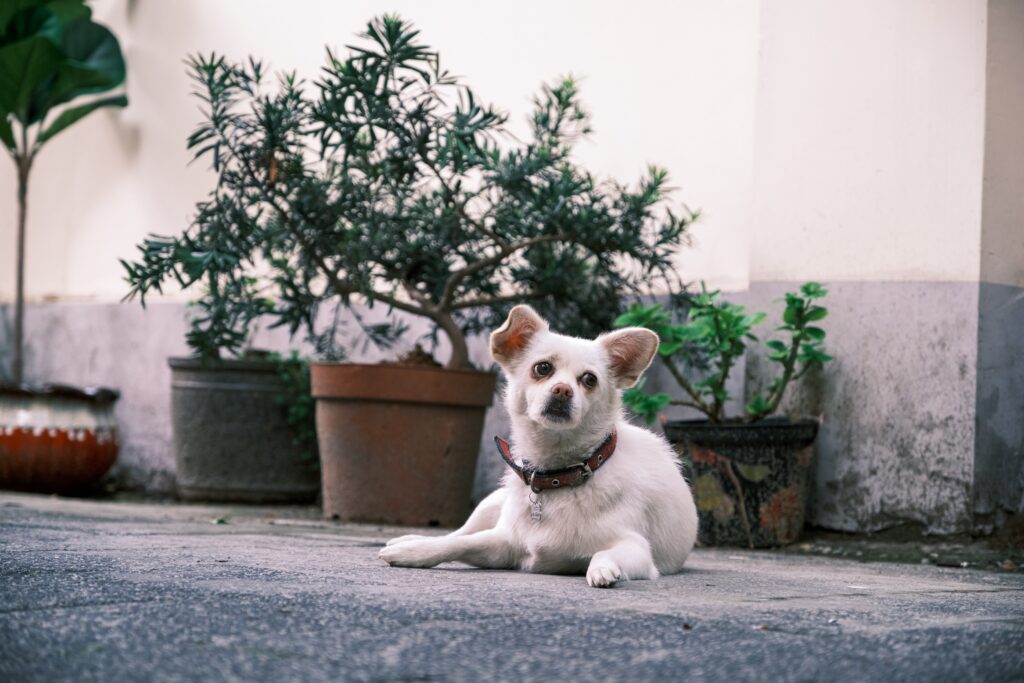
The dream of ever owning a puppy just came true and now you just brought your puppy home. The excitement on twitter, IG and tiktok is overwhelming. A few hours later the puppy has already messed your cosy carpet. Don’t worry as all you need are just a few techniques to home train your puppy so that they can do the right thing at the right spot.
The background and basics of training your puppy at home
- How often do puppies go to toilet?
Generally, puppies relieve themselves every 2 to 3 hours. This will depend on the age and puppy personality and genetics. The older they become the longer they can control their bladder and bowel movement. The frequency of feeding, type of feed and quality of feed are some of the other factors to consider when making a training plan. Fortunately, during the night puppies can hold their bladder longer while asleep that means you will probably have toilet visit at night once or twice.
- What are the tools for training your puppy?
Several methods of training your puppy at home exist. Including crate training, paper training and puppy pads, tethering, penning or carrying. Basically, all these methods revolve around positive reinforcement of good potty behavior. The following will be required for a successful puppy potty training at home
- Crate, paper and puppy pads, dog leash
- Time and lots of patience
- Critical mind and puppy lingo to spot time for eliminating
- Special area/spot for training
- Quality treats
- Training assistance to maintain the routine while you are away
- Training timetable
- Signs to look for when toilet training your puppy
Its important to interpret your puppy signs for short or long call correctly. These signs will likely present themselves after eating, walking up or after play. The signs include;
- Sniffing the floor
- Scratching the door and making noise
- Circling
- Looking restless
The training and planning
Before you start training you need to clean your house thoroughly. This helps to eliminate all the odor which the puppy might confuse with the selected potty spot. Natural and organic disinfectants may be used as well as enzymatic anti odor solutions. Harsh chemical cannot be used as puppies are curious and my lick them leading to them being sick.
Setting up the training timetable
A training timetable is an important tool to guide you in toilet training your puppy. Consistency and patience are very important for your success. The timetable regardless of the training technique chosen will likely look like the template below. Each session may take up to 10 minutes if nothing happens this process should be repeated as soon as the potty signs are shown by the puppy. If the natural event happens the puppy will deserve a petting, praise and treat to reinforce the good behavior
| Early morning after waking up | ✔ |
| After breakfast | ✔ |
| After playing or a walk | ✔ |
| After lunch | ✔ |
| In the evening | ✔ |
| Late in the evening | ✔ |
| At night | ✔ |
The frequency should be reduced or increased depending on the puppy learning curve and age. Feeding should also be moderated and be of good quality to avoid stomach upset.
What if my puppy makes a mistake?
Your puppy will make mistakes and that is acceptable with humans as you learn a new concept you make mistakes which is part of learning. There is no need to scold your puppy as they cannot figure out what is wrong. They might just assume you’re crazy abit-off course you’re not-. Mostly, scolding your puppy will make them scared and probably pee Infront of you or start handing behind your couch. If your puppy makes a mistake carry them to the selected spot and if they pee, praise them and a treat will make them happy and learn. Secondly make sure you do a good job in getting rid of the reminder odor at that spot with enzymatic cleaner. Limiting access to that area is also advised.
Training techniques
- Crate training-dog kennel
Crate training is one of the most used method to get your puppy relieve themselves at the right spot. This technique involves having a comfortable crate for your puppy. Normally the best crates are foldable and easy to partition. When experience in crate training it can very easy and successful process but off course it’s likely this is your first puppy and you have no experience in crate training. The following tips should be noted when toilet training your puppy by crate method.
- Make sure the crate is comfortable with soft padding like puppy mattress or blanket
- Make sure one side is left without bedding but with puppy pads or towel
- Make sure the crate is in a high traffic area like in the kitchen
- Start slowly first with few minutes of training with breaks and then repeating the process again
- Give treats only if the puppy responds positively that is going into the crate
2. Paper training and puppy pads
Puppy pads is another method for training your puppy. These can be used at the crate or at any spot selected within the house. Some puppy owners are tempted to use newspapers which are not as adsorbent as puppy/potty pad. The following tips can help with potty pads.
- Get the most adsorbent potty pads as the less adsorbent one may create a worse mess
- Make sure they are only used at the specific selected training potty spot
- Give your puppy cues like go-potty, good boy/girl etc. while pointing at the potty pad on the selected spot
Though potty pads are good to use they work best when combined with the crate training
3. Play penning
Play penning is a confinement in a court like space. Compared to crate training; playpen have larger space and the puppy can move around and play with chew toy or Kong toys. Play penning has advantages over the crate training that;
The puppy has enough space to move around and satisfy their curiosity by playing with toys
- It helps them to develop independence and confidence since they don’t depend on you to open for them as it’s the case with create training
- It helps to keep your puppy safe from all kinds of problems including chewing on foreign bodies and non-toy objects. Puppies can be very playful and irritating to the older dogs and this can elicit fights which can lead them to being injured
- Play pens can be used inside and outside as they are portable. This makes them the best tool to use especially when your leaving your puppy for long period of time
When potty training your puppy using the play pen the same tips used in the crate training apply. In case you use play pen and your likely to stay late night make sure your pet assistance or puppy sitter will help bring your puppy inside the house or its crate as outside can be cold and dangerous at night
4. Carrying
Carrying is another technique for potty training your puppy. This method is best suited for toy breeds like chihuahua which you can very easily put in your handbag or just hold by your arms. This method requires you to understand the cues that your puppy is about to relieve himself or herself. Once you notice the cues you carry the puppy immediately to the designated potty spot.
General puppy potty training tips
It is recommended you choose one method and stick by it until your puppy learns to relieve themselves at the allocated potty zone. The following is the general process applicable to most training modification may be done based on the tips discussed above.
- Training your puppy on toilet behavior starts from the first day you bring your puppy at home. The first thing is to introduce your puppy to all family members and creating clear understanding of the duties and what is supposed to be done during the potty training
- Avoid allowing the puppy to go to the rooms you don’t indent it to go or the rooms which he is not allowed. It is better to keep those rooms closed and give your puppy an orientation to the rooms you will need him/her to visit
- Its is important to keep an eye on your puppy. Abit of research on your puppy breed behavior is very key in understanding and succeeding in your potty training. Small puppies like chowchow will visit the bathroom frequently as their urinary bladder is small
- Choose the potty zone. This will be based on the method chosen as above but mostly the spot should be outside or within a specific area within the house especially during winter. The zone should be easily accessible and free from households’ items for easy cleaning
- Avoid taking your puppy to areas where other dogs go until it got its third vaccinations. This can be discussed with your veterinarian
- Pick your favorite commands like go or go potty and use that command only when you want them to go to the bathroom
- Give praises and treats only when they potty on the allocated area. This will make the potty time relaxing and fun for your puppy
- When accidents happen don’t scold your puppy act calm and take them straight to the potty zone. If they finish their business their then praise and give them treats for the good job
- Clean the accident scene right away with the enzymatic cleaner or white vinegar to get rid of the odor that reminds the puppy that could be the bathroom yet its not the potty zone
Managing what your feeding your puppy
Puppies have delicate bowels and small urinary bladder. What is fed determine what comes out. Too much processed feed may not be processed well by the puppy gut and therefore there is need feed more natural and quality feed. Quality meat should make an important part of the puppy diet especially chicken and mutton.
How long does it take to potty train the puppy?
Puppies differ in their breed and personality. Some puppies will be quick to learn other will take abit more time. The rule of the thumb is that you should give it a couple of months and keep persisting on reminding your puppy on the potty zone. Once the puppy starts giving you clear clues that its time to go to toilet make sure you act quickly and give your puppy the chance to potty at the designated zone. Keep praising and giving treats whenever they do it in the right spot
Conclusion
Potty training your puppy can be a challenging task. However, with proper information, consistency and patience it can be a rewarding process. Most puppies can be potty trained. The environmental stress and anxiety must be reduced to minimum during this process for the best outcome. If puppies exhibit strange behavior like soiling themselves even with proper training at home, it’s better to consult a professional trainer for detailed analysis of your puppy behavior. Your veterinarian will also be required to examine and provide a health checkup just in case such behavior is health related rather than behavioral.