
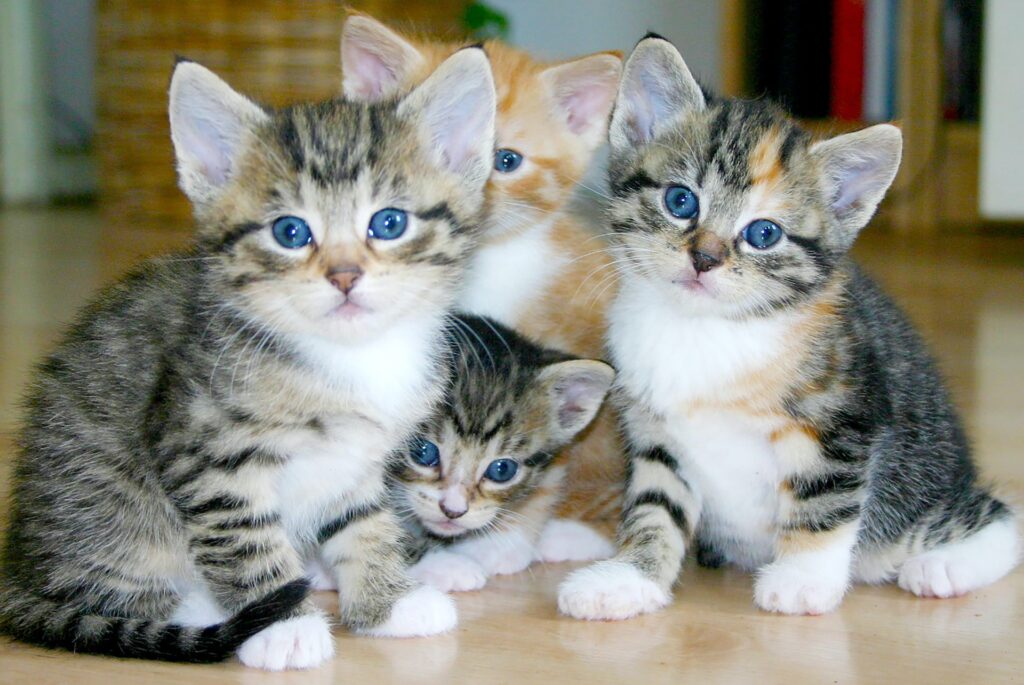
Kittens feed on their mother milk for the first few weeks. The mother’s milk Is highly nutritious and beneficial as it provides passive immunity to protect the kitten against infections in the early part of their life before they can develop the ability to generate active immunity. Its highly recommended to adopt or wean kittens from mothers’ milk at 4 weeks. However, sometimes mam-kitten may be unable to nurse her kittens and kitten milk replacer/formula will have to be used to feed the kittens.
Kitten nutritional requirement
Kittens and Cats are absolute meat-eaters and have no or limited digestive enzymes to breakdown regular cow milk. The nutritional requirement for kittens is different from those of the adult and senior cats. In principle kittens will require four key groups of nutrients to make a balanced diet.
- Proteins
Kittens and Cats require proteins and amino acids for many biological functions and growth. On daily basis a kitten will need about 10g of crude protein. Kittens may not be able to make some of the essential amino acids which are the building blocks for proteins, and therefore they must be provided through the food. Taurine is one of the most important essential amino acid whose deficiency may lead to a couple of metabolic problems and other disorders including deafness, blindness and cardiomyopathy. Arginine helps in ammonia removal through urine, its deficiency can lead to toxic levels of urine in blood system. Examples of protein sources for kittens may include meat, fish and associated animal products.
- Fats
Fats and fatty acids provide highest level of energy in kitten and cats generally as compared to carbohydrates. Essential fatty acids play an important role as carriers of fat-soluble vitamins as well as maintaining cell structure. Cats can sustain reasonably high fat diet without side effects. Essential fatty acids are important for maintaining major physiological functions. Examples of essential fatty acids include Omega-3 and Omega-6. Your kitten will require 4g of dietary fat on daily basis. Sources of fat may be animal fats or plant-based seed oils.
- Carbohydrates
Kittens and health cats may not require carbs as they are obligate meat-eaters. The small intestine for cats is shorter in length making the fermentation of fiber in carbohydrates limited. However, carbohydrates can cat as fillers in their as well as providing energy levels. Source of carbs in cats is mostly from cereals and plant-based foodstuff
- Minerals and vitamins
Kittens and cats will require in specific amounts a wide range of minerals and vitamins. Calcium and phosphorous are essential for bone and teeth formation as well as their integrity. Potassium and magnesium are important for muscle contractions. Other micro-minerals such as selenium, copper and molybdenum are important in enzymatic activities. Access of some of these minerals may cause problems. For example, excess magnesium is associated with kidney stones.
Vitamins help in a variety of metabolic activities including immune and enzymatic functions. Kittens and cats feed on canned fat-fish may suffer deficiencies against vitamin E which acts in defensive mechanisms against oxidative damage. Kittens or cats fed on high level of liver will suffer hypervitaminosis A characterized by lesions of the skeletal system.
Based on this moderation and specific selection of kitten food is important to avoid deficiencies or excessive supply of one nutrient
What kind of food is recommended for my kitten?
The feeding plan discussed here is from birth to about 12 months when you start gradually introducing your kitten to adult food.
0-4 weeks
Kittens under the care of their mother– Kitten mothers’ milk can provide the necessary nutritional requirements for its growth and survival. The mother will often stimulate the kitten for bathroom. At this stage its necessary to monitor all kittens in litter and make sure each kitten gets a fair share of suckling time
Kittens without a mother-Sometimes unfortunately the mother my not be available to feed her kittens and intervention must be done to help the them survive. Avoid feeding kittens adult cat, undiluted cow or goat milk as this might cause life threatening diarrhoea. Feed Kitten milk replacers formulas (KMR) available in the local shops. Alternatively, homemade kitten milk replacers may be used in including 100ml of goat milk, 100ml of sterile water and 2 sterilized egg yolk and 5ml of olive oil. Blend the ingredients together and warm them to 35oc. Make sure the kitten is warm before feeding. Feed the kitten every 2-3 hours for the for the firsts 2 weeks, every 3-4 hours for the next 3-4 weeks. Use a dropper to feed the kitten
The most important part of this process of nurturing the kitten is to make sure you assist it to do its bathroom business. To do this hold the kitten at the back and massage the genital region in circular motion with warm soft tissue. If no urination or poop, do it again after a few minutes. Make sure have paper towels for the kitten to pee or poop on for better hygiene
4 weeks to 6 months
At 4 weeks the kittens are ready for gradual weaning. At this point they may not need assistance to go the bathroom. Weaning can be achieved by making gruel-that is by mixing half parts of wet kitten food with a quarter parts formula. At this stage make sure the kitten is still getting about 15 to 20 cc of KMR or home-made formula.
Tips at this stage is to use flat dishes to feed the kitten or use a spoon to introduce the food to the kitten. Most kittens will transition easily to the weaning food. At 5 weeks up to 6 months solid cat food can be introduced. Introduce the kitten to litter box use training during this period.
6 to 12 months
This is the adolescent stage in kittens. Feeding solid commercial food is advisable as its well formulated to meet the nutritional requirements at that age. Home made diets can also be used. Use cooked meat or fish and feed at warm temperature as cats like their food while warm. Feeding can be done 3 times a day or divided into small regular portions throughout the day.
12 to above 18 months
Your cat or if you prefer calling him or her kitten is about to become a happy jumpy adult cat. At this point gradually switch to adult cat food or feed warm cooked meat or fish. If your cat is free to move around you may notice a little presents and gifts for you from his or her natural habit of hunting. These gifts may include small rats or lizards. Thank your baby cat. However, make sure he/she is well feed so that they don’t end up eating up their game-hunt which might make them sick
Lastly but not least make sure you provide clean drinking water always for your kitten or cat. You may not notice the kitten or cat drink water as most the food contains a lot of liquids. However, it’s good to provide water to supplement the water in food if s/he needs to.
Should I feed my cat Wet or dry food
This question arises a lot in consult rooms. The answer depends on a variety of factors. Kittens below 5 weeks will prefer wet food as its more palatable to them.
Other factors will include;
- Your budget- wet food are abit expensive compared to dry food. The storage and shelf life for wet food its abit short once open and it requires refrigeration
- On the other hand, dry food is cheaper. However, its associated with high levels of calories and it predispose your cat to kidney stones and obesity
Moderation is important when it comes to feeding your cat-baby. The rule of the thumb is to monitor the weight and regulate the food accordingly. Whether wet or dry so long as it satisfies nutritional requirement for your fur-baby then use of weight to manage the feeding can help to control issues of obesity or underfeeding
Should I feed Home cooked or commercial kitten food
Kittens are very sensitive especially at the first 2 to 3 weeks. Its advisable at this age to use the KMR or home-made formula. The best will be the mothers’ milk if she is able to nurse the kittens by herself.
Home cooked food will relatively be fine for your kitten though there is need to be aware that you may not provide the balanced diet provide by the commercial food. To make sure your home feed is balance add a variety of meat from different sources to gain the benefits of different nutritional value of different meat or fish sources
Bonus advice: Food to avoid for my kitten
The following are some of the few normally human food to avoid when considering feeding your kitten or adult cat. In case you suspect, or your cat takes any of the listed human food consult your veterinarian as soon as possible for further advice
- Chocolates and coffee- contains methylxanthines which can poison your cat.
- Citrus fruits- lemon, lime, oranges etc.- contain citric acid and essential oils which can cause diarrheas and sometimes nervous signs
- Dairy products-cats are lactose intolerant
- Grapes and raisins- can lead to kidney failure
- Raw eggs- most of them are infected with salmonellosis which can lead to diarrhea in cats
- Salts- high amounts of salts can lead to diarrhea, vomiting and seizures
- Raw fish and meat-likely to be loaded with disease causing bacteria which can infect your cat or kitten
- Nuts- they full of fats and oils that cause pancreatitis
- Xylitol- sweetener which may cause liver failure